
Key Takeaways
- Meibomian glands sit along your eyelid edges and release oil that keeps tears from drying out too fast.
- Burning, gritty eyes and blurry vision that clears when you blink are all signs of blocked oil glands.
- Screen time, age, hormones, and contact lens wear can slow your oil flow.
- A dry eye evaluation looks at your oil glands and your tear quality, not your glasses prescription.
- Warm compresses, lid care, and in-office options like OptiLight IPL, Forma-i, Lacrifill, and Lipiflow can help you find lasting comfort.
What Meibomian Gland Dysfunction Means
Meibomian gland dysfunction, or MGD, happens when the tiny oil glands along the edges of your eyelids get blocked or the oil inside them thickens. This causes your tears to evaporate too quickly leaving your eyes dry.
If you’re struggling with dry, scratching, or burning eyes, our team at Perry & Morgan Eyecare is here to help you find relief.
How Your Tear Film Works
Your tears consist of three layers: mucus, water, and oil. The oil layer floats on top and slows evaporation, keeping your eyes moist for longer. If the small, oil-producing meibomian glands along your eyelids are blocked, your tears don’t get enough oil and your eyes dry out.
Common Signs & Symptoms to Watch For
MGD tends to build slowly, so you might attribute the feelings to tiredness or allergies. Common symptoms of the condition include:
- Burning, stinging, or a gritty feeling, like sand in your eyes
- Symptoms that grow worse after long stretches at a screen
- Blurry vision that clears for a moment when you blink
Why MGD Happens and Who Gets It
Age and hormone shifts can slow oil production. Long screen sessions play a part too, since blinking helps spread tears across your eyes and you blink less when you’re focused on a screen.
Wearing contact lenses can also contribute to dry eye, as can the dry air that’s common during northern Utah winters.
Blepharitis, a swelling of the eyelid margins secondary to infection or mites (demodex), sometimes appears alongside MGD.

How the Team Diagnoses MGD
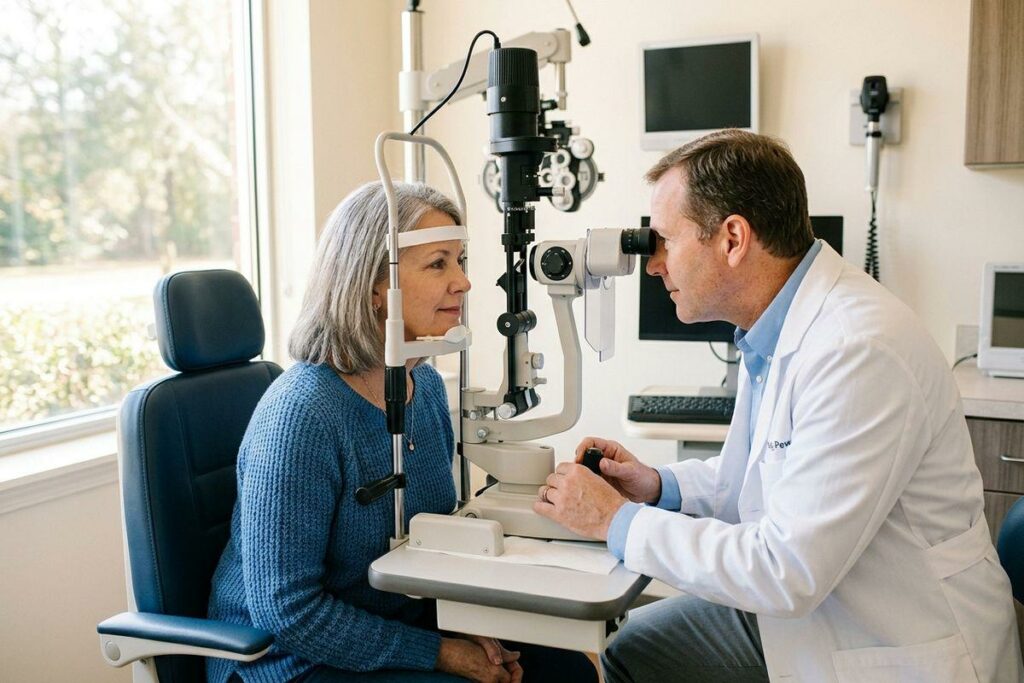
A standard vision check won’t catch MGD, which is why we conduct a full dry eye evaluation. As part of this process, we use meibography imaging to map the glands beneath your eyelids, which tells us whether they’re healthy and functioning. Once we get a sense of your situation, we’ll recommend treatment options.
Treatment Options for Lasting Relief
Relief usually comes from a mix of at-home habits and in-office care. The right blend depends on your situation and the severity of your dry eye.
At-Home Care Steps
- Warm compresses to soften hardened oil so it flows again
- Gentle lid massage and lid cleansers to clear the openings
- Lipid-based drops and omega-3 rich foods to support your tear film
In-Office Treatments
When home care isn’t enough, we offer in-office treatments. These include OptiLight IPL, which uses light pulses to calm evaporative dry eye reducing inflammation, as well as Forma-i and LipiFlow, which applies gentle warmth and pressure to clear stubborn glands. Lacrifill, hyaluronic acid gel, can help with the evaporative process. If you have blepharitis, BlephEx removes debris along the lash line reducing the “bio-load”.
What to Expect Over Time
MGD can be managed, though not fully cured. Early care helps protect your meibomian glands, and good habits keep your eyes comfortable month after month.
At Perry and Morgan EyeCare, we treat every patient like family. If dry, scratchy eyes keep interrupting your day, call us at one of our locations in Perry or Morgan to schedule a dry eye evaluation and take the next step toward clearer, more comfortable vision.