

A new school year brings fresh supplies and new teachers, and it also brings a lot of visual demand on your kid. Between whiteboard notes and hours of reading, their eyes do a lot of quiet work all day long. A quick vision screening at school checks how well your child sees things far away, but it won’t tell you how their eyes team up or track a line of text. A comprehensive back-to-school eye exam covers that ground and gives your child a clearer start to the year.
When Eyes Struggle, So Does Learning
Your child looks at something new almost every minute of the school day, whiteboard notes one moment, a paperback the next. When their eyes struggle to keep up, the work in front of them gets harder before anyone figures out why.
Clear vision affects more than reading. A kid who can’t track a ball well may hang back from recess instead of joining in.
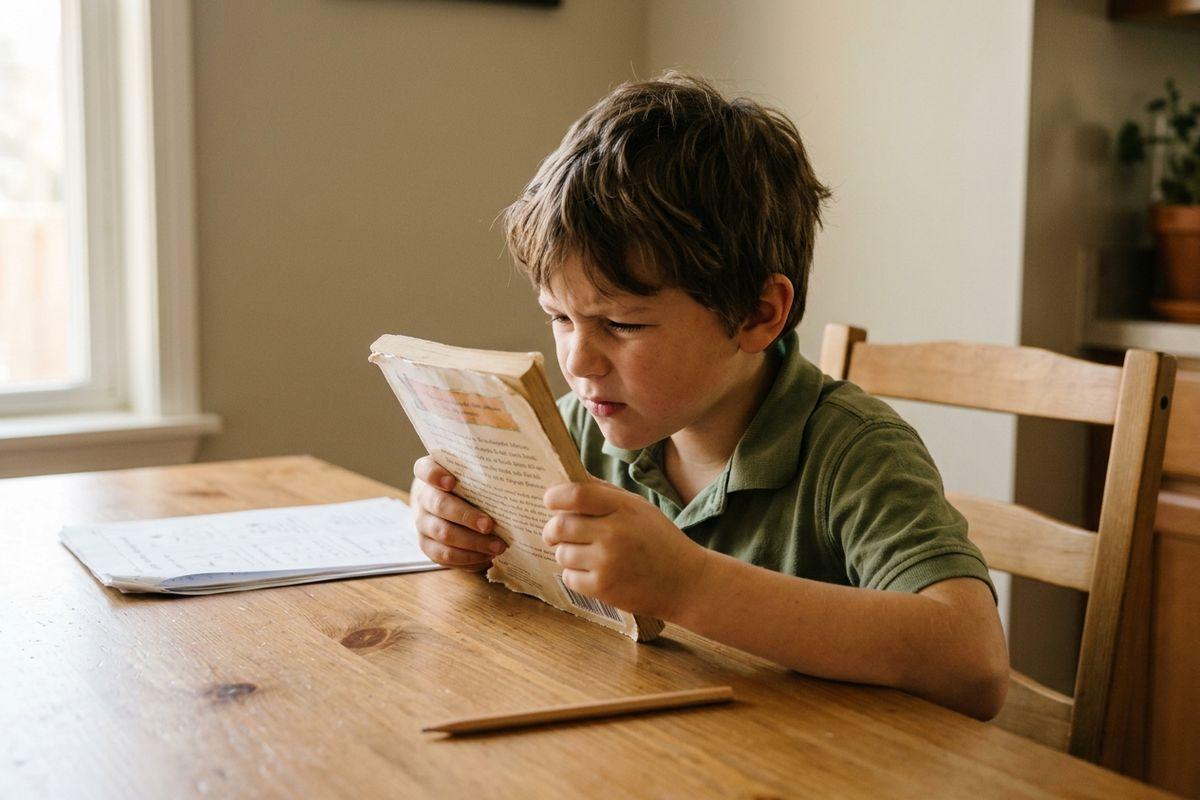
Blurry vision can look like something else entirely, too. A child who squints and gives up on a worksheet might get labeled as distracted, when the real answer sits behind their eyes.
Signs Your Child Might Need an Exam
Kids rarely announce that their vision is off. They assume everyone sees the way they do, so it helps to watch for the habits they pick up instead.
During homework or screen time, keep an eye out for these:
- Squinting, tilting the head, or covering one eye to see better
- Sitting inches from the TV or holding a tablet close to the face
- Rubbing their eyes often or complaining of headaches
- Losing their place while reading or using a finger to track words
- Avoiding books they used to enjoy
What Teachers Notice First
Teachers spend hours watching your child work, so they sometimes spot vision trouble before you do. A note home from the classroom deserves a second look. Ask the teacher if they’ve noticed any of these:
- Trouble reading the board from the back of the room
- Drifting focus or daydreaming during lessons
- Slipping grades in reading or written work
- Avoiding tasks that involve a lot of close-up work
School Screenings vs. Comprehensive Eye Exams
A school screening serves a purpose, and it’s better than nothing. Still, it only checks how well your child sees things far away, similar to reading a letter chart across a room.
A comprehensive exam covers a lot more ground. An optometrist checks how well the eyes work together (binocular vision), focusing, and how well your child’s eyes track (skills they use to read up close without losing their place). The exam also looks at overall eye health, which a hallway screening can’t reach.
What Happens During the Exam
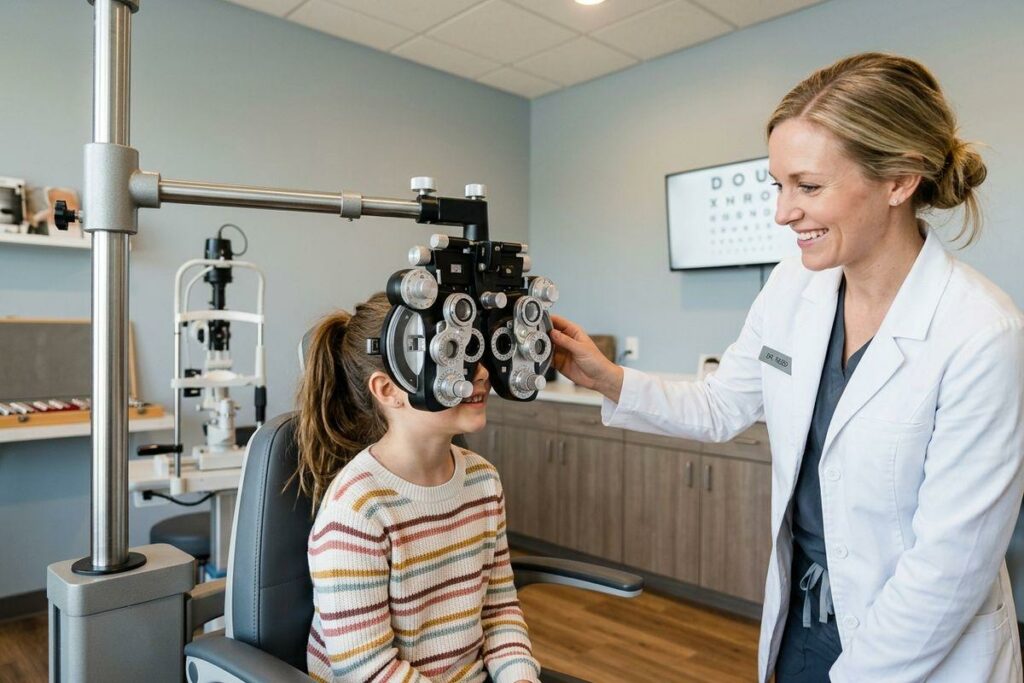
An exam with our team goes beyond a single letter chart. It looks at how your child’s eyes work together, not just how sharp their vision is on its own.
Here’s what the visit typically includes:
- Vision sharpness testing at both near and far distances
- Color vision assesment
- A check of eye alignment and eye movement
- A refraction test to see whether glasses would help
- A look at overall eye health, inside and out
Getting Ready for the Appointment
A little prep goes a long way toward a smooth visit. Follow these steps before you head in:
- Book early, before the back-to-school rush fills up the schedule.
- Write down what you’ve noticed at home and anything the teacher has mentioned.
- Bring past prescriptions or current glasses so the optometrist has a starting point.
- Pack a small snack in case the wait runs a little long.
How to Ease Your Child’s Nerves
A new place with new equipment can feel strange to a kid. Talk it through beforehand, and most of those nerves settle fast.
Tell your child the exam won’t hurt. Walk them through reading some letters and following a small light with their eyes. Mention that the optometrist might use eye drops, which can sting for a second and then feel fine.
Watching for Nearsightedness in Growing Kids
Nearsightedness (myopia) tends to show up and get worse during the school years, when kids spend hours reading and staring at screens. If your child’s distance vision keeps slipping exam after exam, ask the optometrist about ways to slow that change.
Ortho-K lenses reshape the surface of the eye overnight. MiSight soft contact lenses and Essilor Stellest spectacle lenses work during the day instead. These new and exciting options are ways to control or manage how fast your child’s prescription changes. These options are “Myopia Management” solutions which may help slow the speed nearsightedness progresses in some kids.
Time outdoors matters too. Natural light and outdoor play after school can support healthy vision development, so let your child get outside once the homework’s done.
Give Your Child a Clear Start to the Year
Your child’s eyes work overtime once school starts, and a little attention now can save a lot of frustration later. Book a back-to-school exam and get ahead of any vision trouble before it affects the classroom.
Perry & Morgan EyeCare treats your child like family, with exams built around their age and their school day. Schedule an appointment at either the Perry or Morgan location and help your child head into the year seeing clearly.