

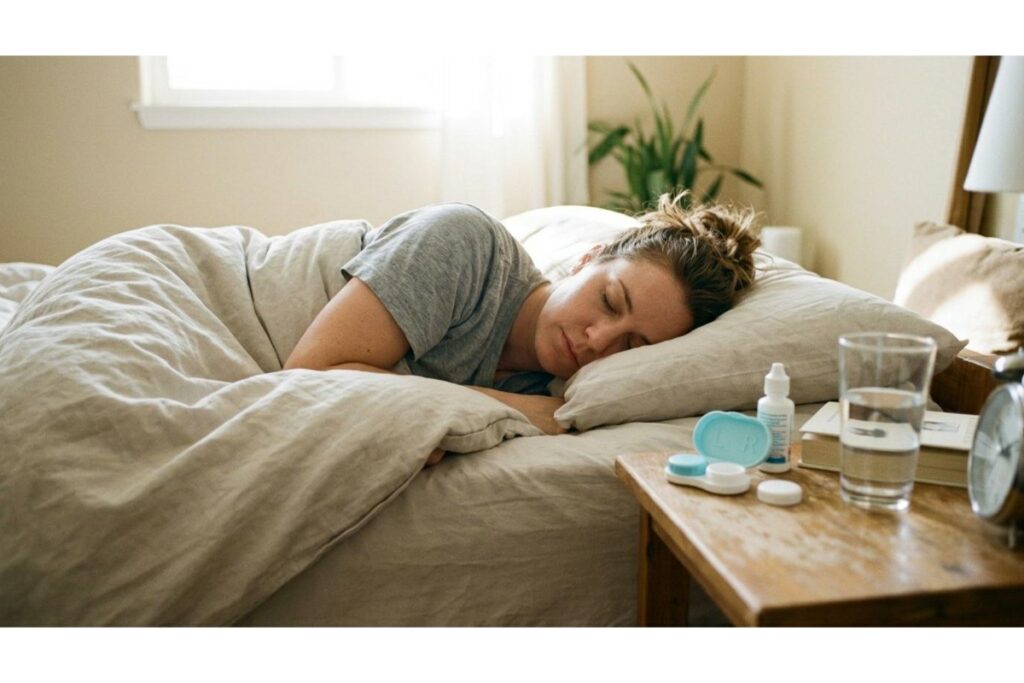
Key Takeaways
- Sleeping in contacts reduces oxygen to your eyes and raises infection risk.
- Even a short nap counts. Any sleep with lenses in creates problems.
- If you do fall asleep with contacts in, use rewetting drops before removing them.
- Some lenses are designed for overnight wear, but they still require a prescription and monitoring.
Your Eyes Need a Break Too
You get to the end of a long day, settle onto the couch, and close your eyes for just a moment. The next thing you know, it’s morning and your contacts are still in. Your eyes feel dry, scratchy, and a little irritated. It’s a familiar situation for a lot of contact lens wearers. At Perry & Morgan EyeCare, we see this come up regularly, and it’s worth understanding what’s actually going on when it happens.
Sleeping in contact lenses, even for a short time, can put your eye health at risk in ways that go beyond simple discomfort. Let’s look at what’s actually happening inside your eye when you sleep with your lenses in, and what you can do about it.
Why Sleeping in Contacts Is Risky
Your eyes need a steady flow of oxygen to stay healthy, and they get most of that oxygen directly from the air. When you close your eyes during sleep, your eyes’ oxygen supply drops. Add a contact lens on top of that, and your eyes are getting less oxygen than they need.
Contacts also create a warm layer between the lens and your eye. That environment is a place where bacteria can build up quickly. Plus, your lenses dry out as you sleep, which increases the risk that they could scratch your eye.
The type of contact lens you wear plays a role in how much oxygen passes through, but no standard lens eliminates this risk entirely.
What Can Happen to Your Eyes
Infections & Corneal Damage
One of the more serious risks of sleeping with your contacts on is keratitis, an infection of the cornea that develops when bacteria trapped under the lens multiply overnight. Keratitis can cause significant pain and may affect your vision if it’s not treated.
In more severe cases, corneal ulcers can develop. These are open sores on the corneal surface that are quite painful and can threaten your long-term vision. Corneal ulcers are not as common as keratitis, but they are a known risk linked to sleeping in contacts.
Other Symptoms to Watch For
Not every reaction to sleeping in contacts is an infection. Some symptoms show up within hours and are worth paying attention to:
- Redness that doesn’t clear up after removing your lenses
- Pain or a persistent stinging sensation
- Unusual sensitivity to light
- Blurry vision that lingers
- Any unusual discharge from the eye
If you notice any of these symptoms after sleeping in your contacts, it’s a good idea to get your eyes checked by a doctor rather than waiting to see if things improve on their own. At Perry & Morgan EyeCare, we offer emergency eye care for situations that can’t wait for a routine appointment.
Does a Short Nap Count?
A lot of contact lens wearers assume that a quick 20-minute nap is harmless. Unfortunately, that’s not quite true. Even a short sleep is enough to reduce oxygen flow and allow bacteria to accumulate under your lenses. The risk is lower than for a full night’s sleep, but it’s still there.
The safest thing to do is to remove your lenses before any sleep, no matter how brief. Keeping a lens case and solution nearby (perhaps on a nightstand or in a couch-side bag) can make this easy to do without planning ahead.

What to Do If You Fall Asleep with Contacts In
It happens to everyone at some point. If you wake up with your contacts still in, don’t panic, but do take care of your eyes right away. Follow these steps:
- Put rewetting or lubricating drops in your eyes and wait a few minutes before touching your lenses. This helps loosen your lenses if they’ve gotten dried and have started to stick to your eye.
- Remove your lenses gently. If a lens doesn’t slide off easily, add more drops and wait. Never tug or force a lens off of your eye.
- Give your eyes the rest of the day to recover with your glasses on. Watch for any symptoms like redness, pain, or vision changes.
If your eyes feel persistently dry or irritated after the incident, consider visiting your optometrist.
Are Any Contacts Safe for Overnight Wear?
FDA-Approved Extended Wear Lenses
Some contact lenses are designed to allow more oxygen through to the eye and have FDA approval for overnight or extended wear. These lenses can work well for the right person, but they still come with some level of risk. Regular checkups are important to make sure your eyes are tolerating your lenses well.
Extended wear lenses require a specific prescription, and not every contact lens wearer is a good candidate for them. Your eye doctor can help you decide whether these kinds of lenses are appropriate for your eyes and lifestyle.
Ortho-K Lenses
Orthokeratology lenses, often called ortho-k, are another category of contact lens. These are rigid lenses worn during sleep that gently reshape the cornea overnight, allowing you to go lens-free during the day. Ortho-k lenses are also often used for myopia management.
While ortho-k lenses are designed for overnight wear, they come with a steeper learning curve, a more demanding care routine, and a longer adaptation period than most other options.
Talk to Perry & Morgan EyeCare About Your Contact Lens Options
Your contact lenses should fit your life, not put your eyes at risk. Our team at Perry & Morgan EyeCare, serving patients in northern Utah, can help you find the right lenses for your lifestyle. Whether you’re curious about extended wear options, ortho-k lenses, or just want to make sure that your eyes are healthy after an accidental overnight wear, scheduling an eye exam is a great next step.
Contact our team to book your appointment today.